
Comprehensive Analysis of Radar Level Gauges: Principles, Applications, and Selection Criteria
In modern industrial level measurement, radar level gauges, with their non-contact nature, high precision, and wide applicability, have become the mainstream choice for advanced level monitoring. Whether it's high-temperature and high-pressure reactors, volatile chemical storage tanks, or even dust-filled solid silos, radar level gauges can operate stably, making them a true all-rounder in the field of level measurement.
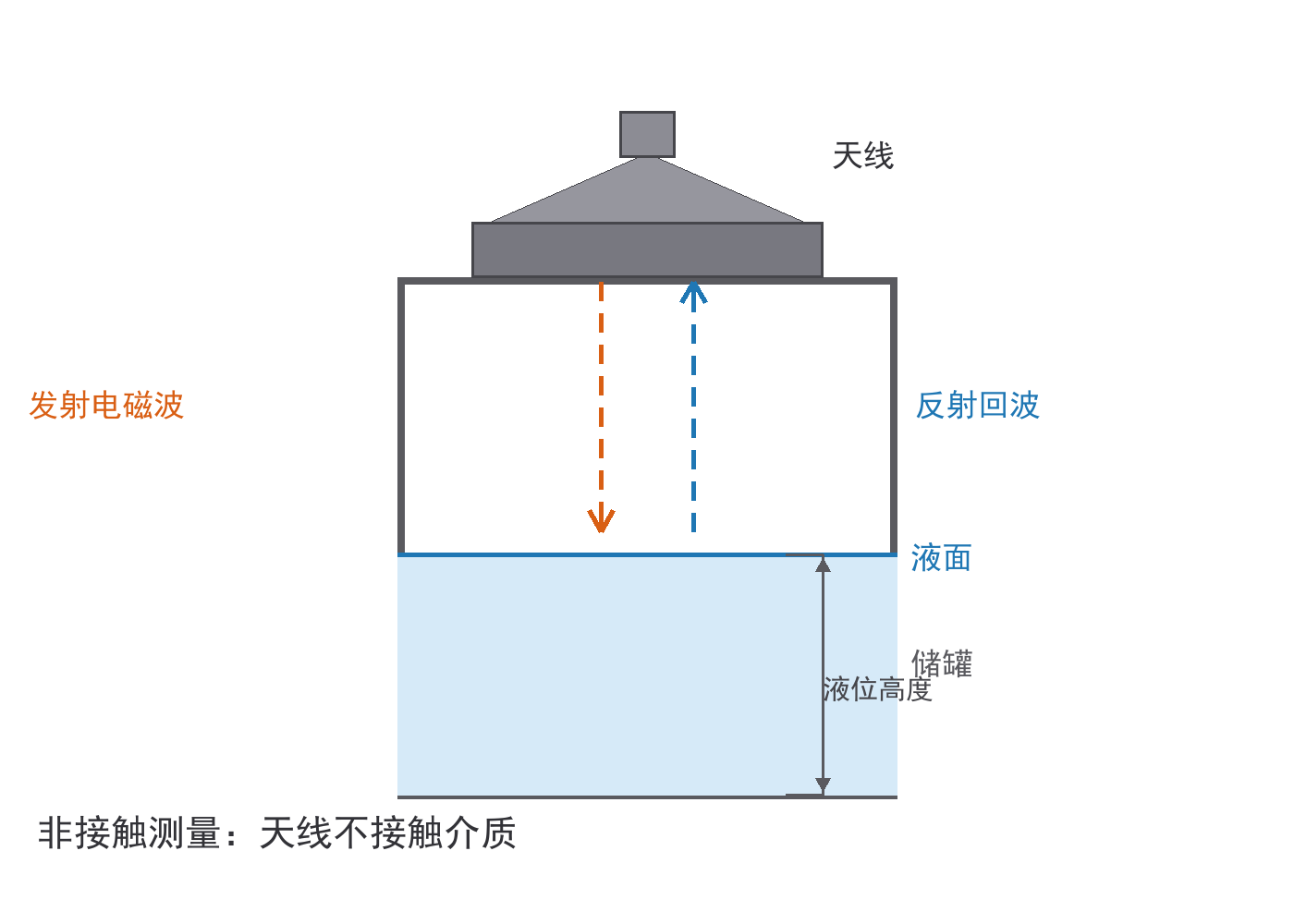
Figure 1 Schematic Diagram of Radar Level Gauge Measurement Principle
I. Working Principle and Technical Classification
Radar level gauges operate based on the principle of electromagnetic wave reflection. The antenna transmits microwave pulses to the surface of the measured medium; when the microwaves hit the medium surface, they reflect back. The instrument calculates the time difference between transmission and reception to convert it into the liquid level height. Throughout the process, the instrument does not come into direct contact with the medium, features fast response speed, and its measurement results are not affected by the medium's viscosity, density, or corrosiveness.
According to the technical approach, radar level gauges are mainly divided into two categories:
· Pulse Radar: Transmits short microwave pulses, with mature technology and moderate cost, suitable for most conventional working conditions.
· Frequency Modulated Continuous Wave Radar (FMCW): It transmits frequency-modulated microwaves, offering higher measurement accuracy and stronger anti-interference capability, making it suitable for complex working conditions and high-precision application scenarios. Common operating frequencies in industrial sites are26 GHzand80 GHz. The 80 GHz high-frequency radar has a smaller beam angle and higher accuracy, making it more suitable for small-opening storage tanks and complex internal tank structures.
Core advantages of radar level gauges include:
1. Non-contact measurement: The instrument does not come into contact with the medium, and is not affected by medium corrosion, viscosity, or density.
2. Extremely wide application range: It can measure liquids, slurries, and solid particles.
3. High temperature and pressure resistance: It can adapt to harsh working conditions such as reactors and boilers.
4. Strong anti-interference ability: Unaffected by steam, dust, and volatile gases (compared to ultrasonic level meters).
5. Overall performance: High measurement accuracy, good stability, and low maintenance requirements.
II. Core Application Scenarios
Chemical Industry: Level monitoring of acid-base tanks, solvent tanks, and reactors. The non-contact design prevents damage to the instrument from corrosive media, making it one of the preferred level meters for the chemical industry.
Oil and Natural Gas: Level monitoring of crude oil, refined oil, and liquefied gas storage tanks. The explosion-proof radar level meter complies with the GB/T 3836 series of explosive atmosphere standards and is unaffected by volatile gases from oil products.
Water Treatment and Environmental Protection: Level monitoring of clear water tanks, sewage tanks, and sludge tanks. The measurement is unaffected by suspended solids and foam in sewage.
Power and Heating: Level monitoring of boiler steam drums, deaerators, and water tanks. The high-temperature and high-pressure radar level meter is suitable for heating operating conditions.
Food and Pharmaceuticals: The hygienic radar level meter meets the hygiene requirements of the food and pharmaceutical industries (such as FDA 21 CFR and EHEDG certifications) and can be used in reaction tanks and liquid storage tanks.
Solid Silo: Level monitoring for solid materials such as pulverized coal, ore, grain, plastic pellets, etc. It is one of the few instruments that can reliably measure solid levels.
III. Key Points for Avoiding Pitfalls in Model Selection
Pay attention to the dielectric constant of the medium. The reflection intensity of radar waves depends on the dielectric constant of the medium. Reference values of dielectric constants for common media: water is about80, alcohols are about20~25, oil products are about2~3, liquefied gases are about1.5~1.8 (typical values; specific values shall be subject to the actual physical properties of the medium). Media with very low dielectric constants have weak reflection signals, so it is necessary to select radar level gauges with higher frequency or larger antennas; if necessary, guided wave radar should be selected.
Be alert to false echoes generated by obstacles in the tank. Structures such as agitators, heating coils, ladders, and stiffeners in the storage tank will reflect radar waves and generate false echoes. When selecting the model, it is necessary to confirm that the instrument has a false echo suppression algorithm, and try to avoid obstacles during installation.
Be cautious in stirring conditions. Violent stirring will cause liquid level fluctuations and generate foam, which will affect radar echoes. For strong stirring conditions, confirm whether the instrument has an algorithm adapted to stirring conditions, or select guided wave radar.
The antenna type should match the working condition:
· Horn antenna: Suitable for most liquid storage tanks, with strong signals.
· Parabolic Antenna: Suitable for solid silos and large tanks, with good focusing performance.
· Rod Antenna: Suitable for small tanks and corrosive media, can be equipped with a corrosion-resistant cover.
· Parabolic/Horn with Purge: Suitable for working conditions with heavy dust and easy crystallization.
Trade-offs between Guided Wave Radar and Non-Contact Radar. For working conditions with extremely low dielectric constant, many obstacles inside the tank, and strong agitation, guided wave radar (contact type) may be more stable; however, since guided wave radar is in contact with the medium, it is affected by corrosion and material adhesion, so a trade-off needs to be made based on the working conditions. Instrument selection can refer to current industry standards such as Code for Design of Petrochemical Automation Instrument Selection (SH/T 3005).
4. Comparison between Radar Level Gauge and Other Level Gauges
Table 1 Comparison of Common Level Gauge Types
Instrument | Measurement Method | Suitable Medium | High Temperature & Pressure Resistance | Disadvantages | |||||
Radar Level Gauge | Non-contact | Liquid, Solid, Slurry | Excellent | Special model required for low dielectric constant media | |||||
Ultrasonic Level Gauge | Non-contact | Liquid, Solid | Average | Highly affected by steam, dust and temperature | |||||
Magnetic Flap Level Gauge | Contact | Liquid | Optional | Not recommended for high-viscosity media or media containing ferromagnetic impurities | |||||
Guided Wave Radar | Contact | Liquid, Low dielectric constant media | Excellent | Affected by material buildup and corrosion | |||||
Hydrostatic Level Gauge | Contact | Liquid | Average | Affected by changes in medium density |
V. Typical Application Case Reference
In a chemical plant's acid and alkali storage tank project, the on-site medium is concentrated sulfuric acid, and acid mist and steam exist in the tank for a long time. After adopting the corrosion-resistant frequency-modulated continuous wave (FMCW) radar level gauge, the instrument maintains non-contact with the medium throughout the process, eliminating the need for frequent cleaning. The liquid level data is stably uploaded to the control system, replacing the previous contact type level gauge that required regular maintenance, significantly reducing on-site inspection and maintenance workload. This case is an example of a typical application scenario; specific project data shall be subject to the actual project.
VI. Frequently Asked Questions
Q: What is the difference between radar level gauges and ultrasonic level gauges? How to choose? Both belong to non-contact measurement, but their working principles differ. Radar level gauges use electromagnetic waves, are less affected by steam, dust, and temperature, offer higher accuracy and stability, and can measure solid levels. Ultrasonic level gauges use sound waves, attenuate significantly in conditions with steam, dust, and drastic temperature changes, and are generally used for conventional liquid and solid measurements. When budget allows, the working condition is complex, or high accuracy is required, prioritize radar level gauges.
Q: Can radar level gauges be used for media with very low dielectric constants (e.g., liquefied gas)? Yes, but special model selection is required. The lower the dielectric constant, the weaker the radar echo signal; in such cases, it is recommended to select a radar level gauge with a higher frequency (e.g.,80 GHz) or a larger antenna. If necessary, guided wave radar can be considered. It is recommended to provide medium physical property parameters before model selection for assessment by the manufacturer.
Q: What is the daily maintenance workload of radar level gauges, and what is their service life? Radar level gauges are non-contact measuring instruments with no moving parts, so their daily maintenance workload is very small, and they are basically maintenance-free under conventional working conditions. The main task is to regularly check whether there is material adhesion or crystallization on the antenna surface. Under normal model selection and installation conditions, the instrument can operate stably for a long time; the specific life is affected by working condition factors such as temperature, pressure, and corrosiveness, and it is recommended to evaluate based on on-site conditions.
VII. Conclusion
Radar level gauges represent the high-end level of modern liquid level measurement. With their characteristics of non-contact, wide applicability, and high stability, they solve many problems of traditional level gauges under complex working conditions such as corrosion, high temperature, high pressure, and dust. However, blind pursuit of high-end models is not advisable during selection; a reasonable match should be made based on parameters such as the medium's dielectric constant, tank structure, stirring status, temperature, and pressure. Consult a professional manufacturer when necessary.
Zhongke Fluid provides a full range of products including pulse radar, frequency-modulated continuous wave (FMCW) radar, and guided wave radar, covering general-purpose, high-temperature and high-pressure, corrosion-resistant, explosion-proof, and hygienic types, to meet level measurement needs across multiple industries such as chemical, oil and gas, water treatment, power, food, and solid silos. For selection recommendations, please contact the professional technical team of Zhongke Fluid.
References and Notes
· Explosion-proof Requirements: GB/T 3836 series of national standards for explosive atmospheres.
· Instrument Selection: SH/T 3005, "Code for Design of Selection of Petrochemical Automation Instruments".
· Hygiene Requirements: FDA 21 CFR, EHEDG, and other internationally recognized food and pharmaceutical hygiene certification systems.
· Data Specifications: The parameters such as dielectric constant, measurement accuracy, and frequency mentioned in the text are typical values for common media and general industry levels; specific values shall be subject to the on-site medium properties and the selected model.
· Information validity: The information in this article is up to November 2026.